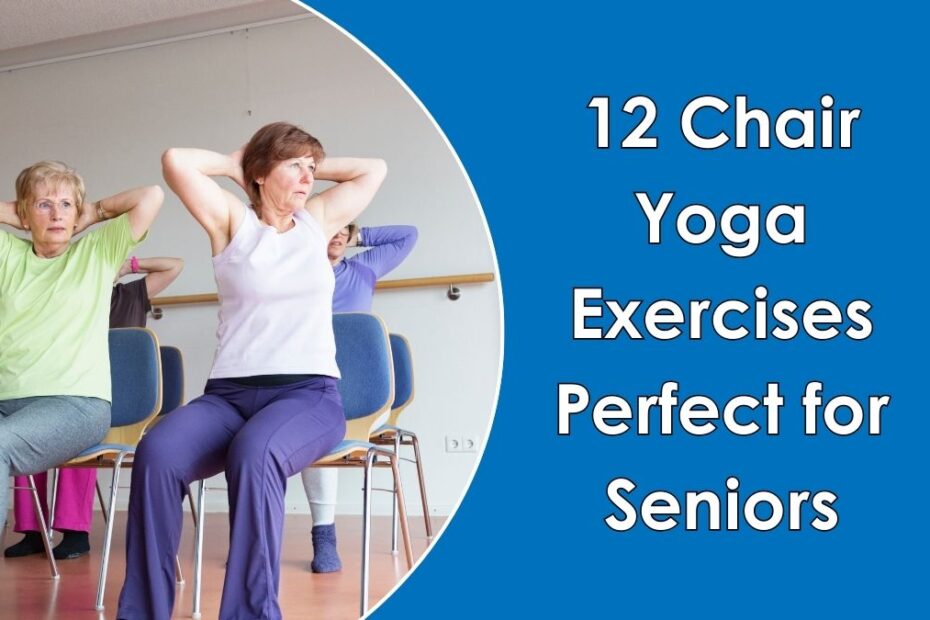
As we age, maintaining mobility, strength, balance, and mental wellness becomes increasingly important — yet traditional workouts might feel too intense or risky.
That’s where chair yoga shines. Chair yoga adapts yoga poses for seated or supported positions, making it ideal for seniors, people with limited mobility, or those wanting a low-impact exercise routine.
For older adults, chair yoga provides a safe, gentle, but effective path to improved physical health, joint mobility, balance, and emotional well-being — all without the need to get down on the floor or risk falls.
In this article, you’ll discover 12 chair yoga exercises perfect for seniors, how to perform them, and why they’re beneficial. We also look at research-backed advantages, offer practical guidance for beginners, and answer common questions.
Why Chair Yoga Is Great for Seniors
Chair yoga offers many health benefits tailored to older adults. Here’s a quick look:
- Low impact & gentle on joints: Chair yoga reduces strain on knees, hips, and back — ideal for those with arthritis or joint pain.
- Improves strength, flexibility & mobility: Regular practice supports muscle strength (upper, lower, core), limb endurance, joint range of motion, and flexibility.
- Enhances balance & reduces fall risk: By strengthening legs, hips and core — and improving agility — chair yoga helps lower the risk of falls.
- Eases pain and supports joint health: For seniors with arthritis or osteoarthritis, chair yoga can reduce joint pain and make everyday movement easier.
- Boosts mental & emotional well-being: Chair yoga supports stress reduction, improved mood, better sleep, and overall quality of life.
- Accessible & safe: Requires just a stable chair (non-wheeled), minimal space, no special equipment — making it ideal for home use, even for those with subtle mobility restrictions.
Because of these benefits, many health experts and yoga instructors recommend chair yoga as a regular fitness practice for seniors.
12 Chair Yoga Exercises Perfect for Seniors
Here are 12 gentle yet effective chair yoga exercises you can try. Aim for 1–3 rounds of each, depending on comfort and strength level. Always sit on a sturdy, non-wheeled chair, keep your feet flat, and practise slowly with controlled breathing.
| # | Exercise Name | Purpose & Key Benefits | How to Perform (Step-by-Step) |
|---|---|---|---|
| 1 | Seated Mountain Pose | Improves posture, spinal alignment, core stability | Sit upright with feet flat, knees aligned. Rest hands on thighs. Inhale deeply, lengthen spine, shoulders relaxed. Exhale and release. Stay 5–8 breaths. |
| 2 | Seated Cat–Cow Stretch | Enhances spinal flexibility, reduces back tension | Sit tall, hands on knees. Inhale: arch back, lift chest (Cow). Exhale: round spine, chin to chest (Cat). Repeat 5–10 cycles, flowing with breath. |
| 3 | Seated Spinal Twist | Improves spinal mobility, aids digestion, gently stretches torso | Sit straight, feet flat. Place right hand on outside of left thigh, left hand on chair back. Inhale, lengthen spine; exhale, twist gently left, look over left shoulder. Hold a few breaths. Repeat other side. |
| 4 | Seated Forward Fold | Stretches lower back, hamstrings; relieves tension | From seated position, inhale length, exhale to hinge forward from hips, reaching toward feet (knees can be bent). Relax head and neck. Hold 3–5 breaths, come up slowly. |
| 5 | Seated Hip Opener / Seated Pigeon-Style Stretch | Opens hips, increases hip flexibility, eases sitting discomfort | Sit tall, bring right ankle to rest over left knee (like figure-4). Keep spine straight, hinge slightly forward for deeper stretch. Hold 5 breaths. Switch legs. |
| 6 | Seated Heel Raises (or Calf Raises) | Strengthens calves, ankles; boosts lower-leg circulation and stability | Sit upright, feet flat and hip-width. Inhale, lift heels off the floor, rising onto balls of feet; exhale, lower heels. Repeat 8–12 times. |
| 7 | Seated Extended Mountain / Reach Up & Side Stretch | Enhances shoulder mobility, side-body stretch, improves breathing and posture | Sit straight. Inhale, lift arms overhead (or to side), lengthen spine; exhale and lean gently to one side, feeling stretch along flank. Hold a couple of breaths, return, then other side. |
| 8 | Seated Warrior II (Modified Chair Version) | Strengthens hips, thighs, core; opens hips and promotes balance | Sit in middle of chair, widen legs (along seat edges), keep spine upright. Extend arms sideways at shoulder height, gaze over front hand. Hold few breaths, repeat. |
| 9 | Seated Side Neck & Shoulder Stretch / Eagle-Arms Variation | Releases neck, shoulder, upper-back tension; improves posture | Sit upright; gently stretch arms forward, then cross one arm over the other, bend elbows, press forearms together (or clasp hands), lift elbows to shoulder level. Hold 3–5 breaths. Release and swap arm order. |
| 10 | Seated Core Twist & Reach (Gentle Core Engagement) | Activates core muscles, improves posture and trunk stability | Sit tall. Inhale, reach arms overhead; exhale, bend slightly forward and twist to one side, reaching toward a knee or seat. Hold, then return and repeat other side. |
| 11 | Seated Leg Extension / Straight Leg Raise (with support if needed) | Builds thigh (quadriceps) strength, improves knee and hip joint mobility | Sit upright. Extend right leg out straight parallel to floor if possible (or as high as comfortable), flex foot, hold 2–3 seconds. Lower slowly. Do 8–10 reps per leg. Use chair back for support if needed. |
| 12 | Seated Deep Breathing & Relaxation / Mindful Breathing | Reduces stress, calms mind, improves breathing, supports mental well-being | Sit quietly, hands on thighs or belly. Close eyes (if comfortable). Inhale deeply through nose, expanding belly; exhale slowly through mouth. Repeat 5–10 cycles, focusing on breath and relaxing muscles. |
Tips for Safe and Effective Chair Yoga Practice
To get the most out of chair yoga — and avoid injury — seniors should follow these practical guidelines:
- Use a stable, non-wheeled chair: Preferably an armless chair placed on a flat surface. Avoid rolling or swivel chairs.
- Wear comfortable, loose clothing: Allow free movement of limbs, hips, and spine.
- Start slow, listen to your body: Begin with 1–2 rounds (or fewer) of each exercise, and gradually increase as comfort improves.
- Focus on breath control: Use slow, mindful breathing to enhance relaxation and maximize benefits.
- Modify as needed: If a pose feels uncomfortable, reduce the range of motion, skip, or adapt the movement — avoid forcing your body.
- Consult a healthcare professional if needed: Especially if you have chronic conditions, joint issues, or recent surgeries.
- Be consistent: Regular practice (e.g., 2–4 times per week) is more beneficial than occasional sessions.
Research & Scientific Insights
- A comprehensive review of 22 studies concluded that chair yoga can improve mobility, functional independence, and quality of life in older adults.
- In a 2023 study focused on older adults with knee osteoarthritis, participants practising chair yoga experienced improvements in flexibility, muscle strength, and ability to perform daily activities.
- Regular chair yoga has been shown to reduce pain and fatigue, especially in those with joint conditions, improving daily functioning after 8–12 weeks of program.
- Beyond physical benefits, seniors practicing chair yoga reported reduced stress, improved mood, and enhanced emotional well-being.
Although many studies involve small sample sizes, the evidence so far supports chair yoga as a safe, beneficial practice for seniors — especially for improving mobility, balance, and quality of life.
How to Incorporate Chair Yoga into Daily Life
- Designate a regular time and space: Choose a quiet, stable spot with a sturdy chair — perhaps early morning or after breakfast.
- Begin with warm-up and mindful breathing: Start with deep breaths and gentle stretches (e.g. Seated Mountain, Neck & Shoulder Stretch).
- Mix and match poses: Depending on mood and energy, you might choose 5–6 poses per session (e.g. warm-up, spinal twist, hip opener, calf raises, core stretch, final breathing).
- Aim for consistency over intensity: Even 10–20 minutes, 2–4 times a week, can yield noticeable improvements.
- Combine with other healthy habits: Light walking, balanced diet, hydration, good sleep — chair yoga works best as part of an overall healthy lifestyle.
- Adjust as needed: On days of stiffness or pain, focus more on gentle stretches and breathing; avoid overextending.
Chair yoga is far more than “yoga for the elderly.” It’s a powerful, accessible — and often overlooked — path toward better health, mobility, and emotional well-being for seniors. With just a chair and a few minutes each session, older adults can build flexibility, strength, balance, and mental calm.
The 12 exercises described above — from Seated Mountain to Core Twists to Calf Raises — provide a well-rounded routine that works many parts of the body gently but effectively. Combined with consistency, mindful breathing, and safe practice, chair yoga can help seniors stay active, independent, and feel younger in body and spirit.
So if you or a loved one are looking for a safe, comfortable way to stay fit and flexible — give chair yoga a try. It might just be the gentle boost your body — and mind — needs.
FAQs
1. Is chair yoga effective even if I have limited mobility or joint pain?
Yes. Chair yoga is designed for people with limited mobility, arthritis, or joint pain. Its gentle, low-impact movements reduce stress on joints and help improve flexibility, muscle strength, and mobility — often without causing pain.
2. How often should seniors do chair yoga for visible benefits?
Aim for 2–4 sessions per week, each lasting 15–30 minutes. Consistency matters more than intensity. Even modest, regular practice can lead to improved strength, balance, and flexibility over weeks.
3. Is there an age after which it’s “too late” to start chair yoga?
Not at all. Chair yoga is widely recommended for older adults, even those in their 80s and 90s, provided it’s practiced carefully and under guidance if needed. Benefits — like improved mobility, mood, and independence — can begin even with the first few sessions.