
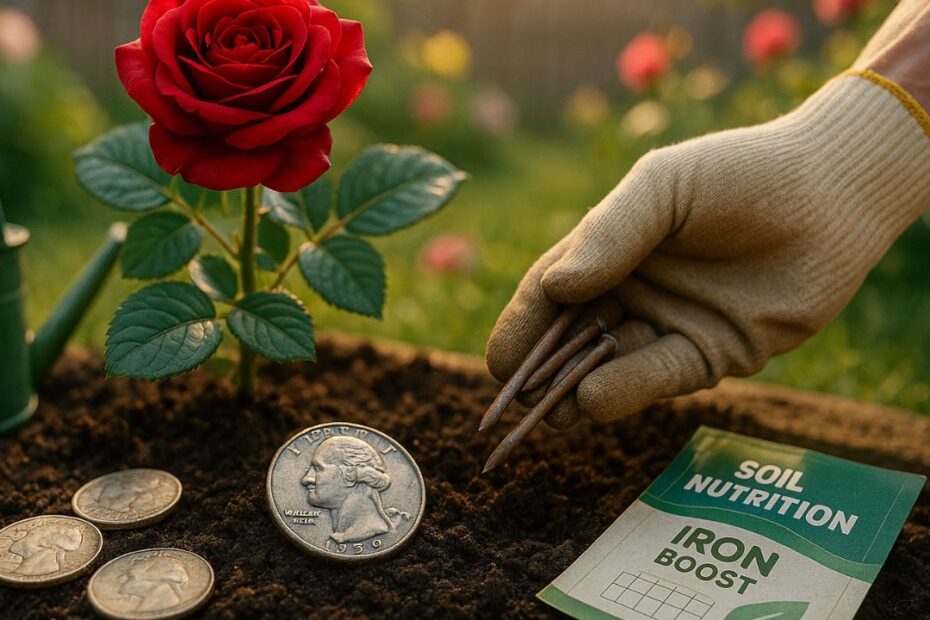
Many older gardeners had simple habits that looked unusual but worked surprisingly well. One of the most interesting habits was burying a rusty nail under a rose bush. It sounds strange today, but this old trick has a thoughtful logic behind it.
Roses are beautiful but also sensitive, and gardeners of the past learned to understand them by watching their behaviour closely. This article explains why they buried rusty nails, how it works, when you should use it, and what this tradition says about gardening even today.
Why Old Gardeners Used Rusty Nails
For many years, older gardeners kept small boxes of rusty nails, nuts, and bolts in their sheds. They believed that roses needed extra iron, and a rusty nail was an easy way to give it. They did not worry about scientific terms or expensive fertilizers.
They simply noticed that when the soil lacked iron, the roses showed clear signs like yellow leaves and weak growth. Placing a rusty nail in the soil slowly released iron, which sometimes helped the plant recover.
This practice spread across families and generations. Children were often told, “Give the rose some iron,” and they would gently press a nail into the soil. It was a simple act of care and attention.
How Iron Helps Roses
Iron is one of the important micronutrients that roses need to stay healthy. It helps the plant make chlorophyll, the green pigment that keeps the leaves bright and strong.
When a rose plant does not get enough iron, the leaves become pale yellow with green veins. Flowers may lose their colour, and the plant grows slowly.
A rusty nail breaks down over time and releases iron oxide. The rose roots may absorb small amounts of this iron, especially if the soil is naturally low in nutrients.
How to Use the Rusty Nail Trick Correctly
Using this old trick is simple, but it must be done correctly and carefully.
- Use plain iron or mild steel nails only.
- Do not use coated, painted, galvanised, or stainless-steel nails.
- Push one or two nails into the soil about 10–15 cm away from the stem.
- Place them 5–8 cm deep so that they stay inside the root zone.
- Water normally and leave the nails to break down slowly.
Old gardeners usually added nails only once a year. More nails will not work faster. The process is slow and gentle.
What the Rusty Nail Can and Cannot Fix
Many beginners think this trick can fix all problems in roses, but that is not true. A rusty nail only helps if the plant really lacks iron. It cannot solve issues like:
- Waterlogging
- Poor drainage
- Fungal diseases
- Root damage
- Overwatering
- Pest attacks
If your rose still looks weak after using a nail, you may need a proper soil test or a targeted fertilizer.
Why Gardeners Used Rusty Nails
| Point | Detail | Why It Helps Gardeners |
|---|---|---|
| Old Trick | Given by older gardeners to “add iron” to roses | Helps understand why the practice lasted so long |
| Role of Iron | Iron supports chlorophyll production | Helps identify iron deficiency in plants |
| Modern Use | Slow-working and not a complete treatment | Prevents unrealistic expectations |
What This Tradition Still Teaches Us
Burying a rusty nail under a rose bush may look simple, but it shows something deeper about gardening. It reminds us that small acts of care matter. Gardening is not only about perfect fertilizers or strict rules.
It is about noticing your plants, paying attention to changes, and trying simple methods with patience. Even today, you may choose modern fertilizers, but the gentle act of kneeling, placing a nail in the soil, and hoping for improvement carries the same spirit as old gardeners.
The tradition of using a rusty nail for rose bushes is a mix of experience, observation, and old wisdom. While this trick works only when the soil truly lacks iron, the deeper lesson is about giving thoughtful care to your plants.
Whether you use a rusty nail or a modern fertilizer, healthy roses grow best when you combine patience, attention, and simple, consistent care.
FAQs
1. Does burying a rusty nail really help roses?
Yes, but only when the soil is low in iron. It will not fix other problems like diseases or bad watering.
2. How many nails should I use for one rose bush?
One or two nails are enough. Adding more will not speed up the process.
3. Can I use any type of nail?
No. Only plain iron or mild steel nails are suitable. Avoid coated or stainless-steel nails.